A cedar shake roof is one of the most beautiful features a home can have, and one of the most rewarding to take care of. Cedar is naturally resistant to decay and insects, but it is still wood. How well it is maintained has a bigger effect on its lifespan than almost anything else.
The difference is significant. A well-kept cedar roof can serve a home for 30 to 40 years or more, while a neglected one may need replacement in half that time. (We explain why in our article on how long a cedar shake roof lasts.) The good news is that cedar shake roof maintenance is not complicated. It mostly comes down to keeping the roof clean, dry and protected, and doing a few simple things at the right time of year.
This guide is written with Chicago-area weather in mind, but the same principles apply to most of the Midwest and other regions with cold winters and humid summers.
Why Cedar Roofs Need Regular Care
Cedar handles rain well as long as it can dry out afterward. Problems start when moisture stays trapped on or under the shakes. Leaves, pine needles, dirt and moss all hold water against the wood, which encourages mildew, rot and premature splitting.
The Cedar Shake & Shingle Bureau puts it simply: cedar needs to breathe, and any buildup of debris on the roof affects how long it will last. Sun is the other factor. UV exposure gradually dries the surface, and untreated wood on sunny slopes can crack and erode over time.
Regular maintenance addresses both problems before they turn into expensive repairs.
Spring Checklist
Winter is hard on roofs, so spring is the right time for a thorough check.
- Look over the roof from the ground with binoculars for missing, cracked or lifted shakes
- Check the eaves and valleys for damage from ice dams and snow buildup
- Clean gutters and downspouts so spring rain can drain freely
- Inspect flashing around chimneys, skylights and vents for gaps or corrosion
- Look in the attic for water stains, damp insulation or daylight coming through
- Note any areas where moss or algae has started to appear
- Schedule a professional inspection if you see anything unusual
Summer Checklist
Warm, humid Midwest summers are prime growing season for moss, algae and mildew, especially on north-facing and shaded slopes.
- Keep an eye on green or black growth, particularly under trees
- Trim branches that overhang the roof or touch it, allowing more sun and airflow
- Make sure attic vents, soffit vents and ridge vents are not blocked
- Watch for shakes that are cupping or curling more than usual
- Summer is usually the best time for cleaning and applying a protective treatment, since the wood needs dry weather before and after application
For large or mature trees near the house, it is worth working with a certified arborist. You can find one through the International Society of Arboriculture’s Find an Arborist directory.
Fall Checklist
In tree-lined suburbs such as Hinsdale and Oak Park, fall is the most important season for a cedar roof.
- Remove leaves and needles from the roof surface, valleys and the gaps between shakes
- Clean gutters after most leaves have dropped, and again if needed
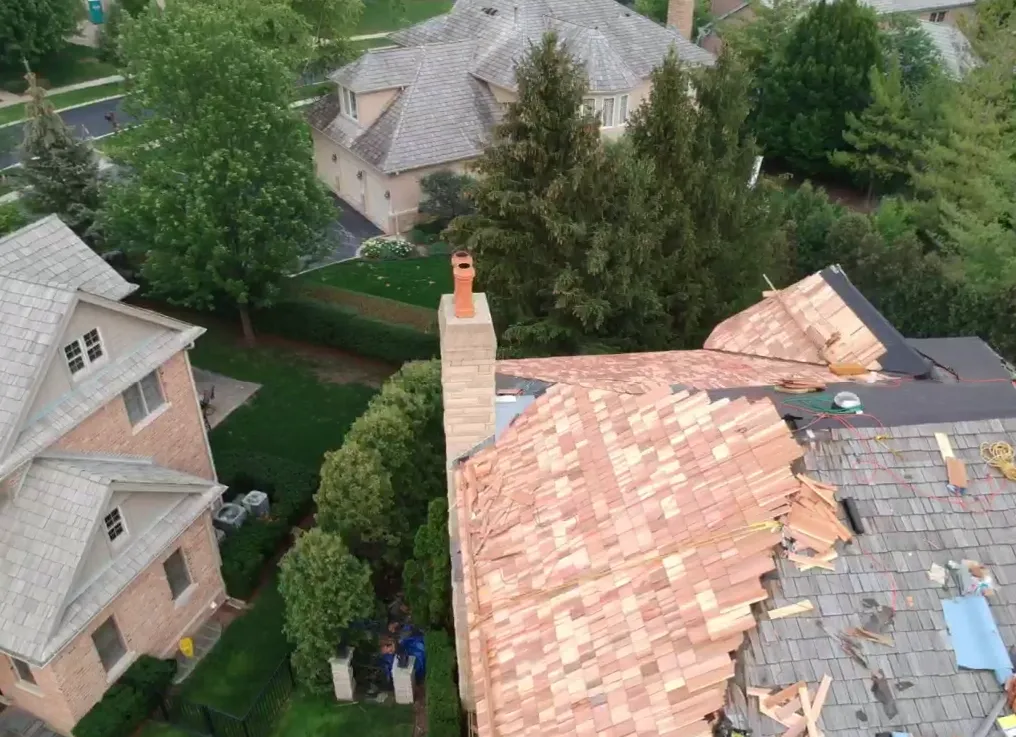
- Replace any damaged or missing shakes before winter weather arrives
- Confirm that attic insulation and ventilation are in good shape to help prevent ice dams
- Check that ice and water protection at the eaves has not been compromised by previous damage
Winter Checklist
Winter maintenance is mostly about observation and avoiding damage.
- Watch for large icicles and ice buildup at the eaves, a sign of possible ice dams
- Look for water stains on ceilings or walls during thaws
- Avoid chipping ice off the roof with shovels or hammers, which can break the shakes
- Use a roof rake from the ground only with care, keeping the blade from catching on the shake edges
- Call a professional if ice dams are causing leaks
Do Cedar Shingles Need to Be Treated?
Cedar contains natural oils that help it resist decay, so an untreated roof will not fail overnight. Still, in a climate like ours, periodic treatment is one of the best ways to extend a cedar roof’s life and keep it looking good.
A quality treatment typically works in three ways: it repels water, slows UV damage and helps prevent mold, mildew and moss. The Cedar Shake & Shingle Bureau’s Care & Maintenance brochure recommends choosing products that are specifically labeled for use on cedar roofs and that act as a water repellent, UV inhibitor or registered wood preservative.
How often you need treatment depends on the product, the roof’s exposure to sun and shade, and local conditions. In general, expect to retreat every few years. A professional can tell you when your roof is due by looking at how the wood is weathering.
One important caution: avoid heavy oils, especially in humid climates. The Bureau notes that oiling can prevent shakes from breathing and drying properly, which can actually shorten their life. Never use improvised products such as motor oil.
At All Roofs Cedar Shake, we use eco-friendly, water-based treatments that protect against moisture and UV while letting the wood breathe. They are low-odor and available in natural cedar tones.
How to Clean Cedar Shingles Safely
Cleaning removes dirt, moss and algae so the wood can dry properly and treatments can soak in. Done wrong, however, cleaning can cause more harm than good.
High-pressure power washing is the most common mistake. In inexperienced hands, a strong spray can strip away layers of wood fiber, raise the grain and force water up under the shakes. The Bureau considers power washing a job for professionals who can judge the roof’s age and condition and adjust pressure and technique accordingly. When a roof is washed, it should be followed by a protective treatment.
Gentler methods, such as low-pressure rinsing combined with cleaners designed for cedar roofs, are usually the safer choice. Whatever the method, the roof must be allowed to dry completely before any treatment is applied.
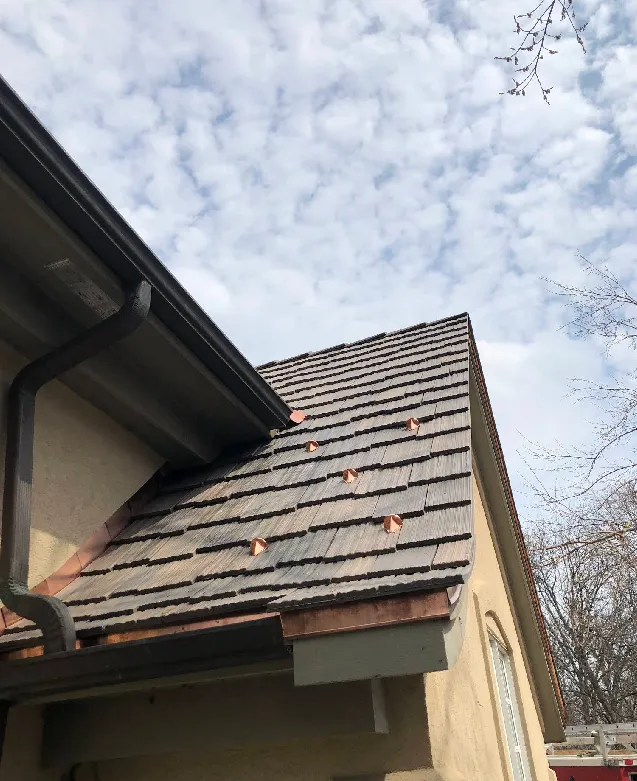
For long-term moss control, copper or zinc strips installed near the ridge can help. When rain washes over the metal, it carries trace amounts down the roof that discourage growth. According to the Bureau, this protection typically reaches a few feet below the strip, so it is most effective as part of a broader maintenance plan.
Mistakes to Avoid
- Walking on the roof yourself. Wet cedar is slippery, and foot traffic can crack shakes. The Cedar Shake & Shingle Bureau advises homeowners not to walk on their roofs.
- Letting debris sit through the winter
- Using high-pressure washers without experience
- Applying treatments to wet or dirty wood
- Painting a cedar roof, which traps moisture
- Ignoring small repairs until they become leaks
- Blocking attic vents, which traps heat and moisture under the roof
When to Call a Professional
Homeowners can handle much of the observation and gutter cleaning. Anything that requires getting on the roof, including cleaning, treatment, shake replacement and flashing repair, is best left to a crew that specializes in cedar.
A professional inspection every year or two is a small investment compared to the cost of replacing a roof early. It also gives you a clear picture of your roof’s condition, so you can plan ahead rather than react to a leak.
If you are still deciding on roofing materials, you might also find our comparison of real cedar vs. synthetic shakes helpful, since maintenance is one of the key differences.
Keep Your Cedar Roof Beautiful for Decades
Cedar rewards homeowners who take care of it. A few hours of attention each season, combined with professional cleaning and treatment every few years, can add many years to your roof’s life and keep it looking the way it did on the day it was installed.
All Roofs Cedar Shake provides complete cedar roof care, from inspections and repairs to cleaning, eco-friendly treatments and ventilation upgrades. Contact us today to schedule an inspection, or check our service area to see if we work in your neighborhood.