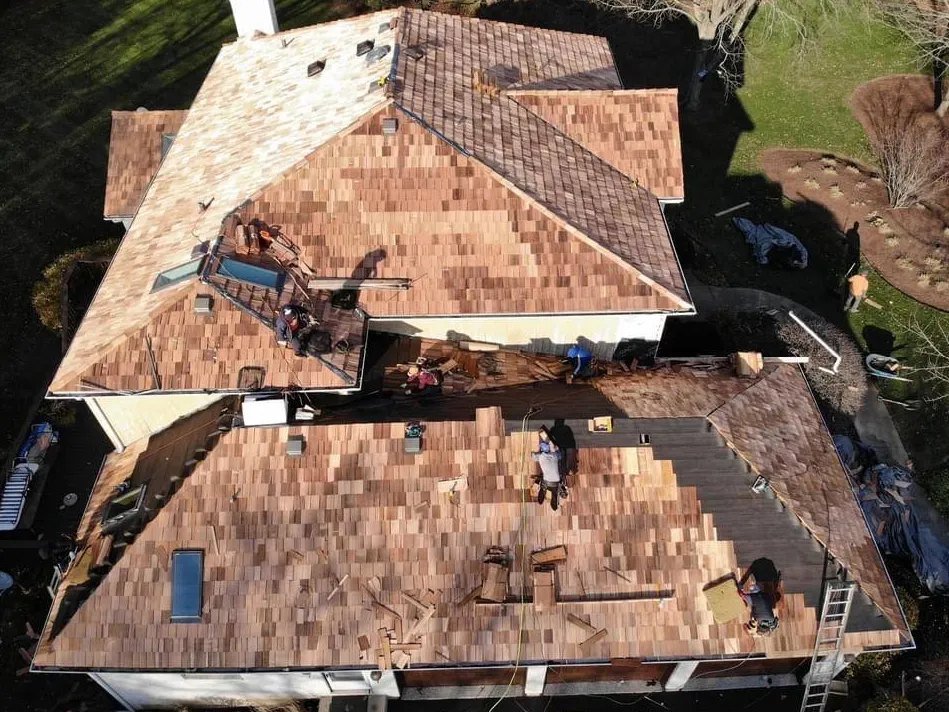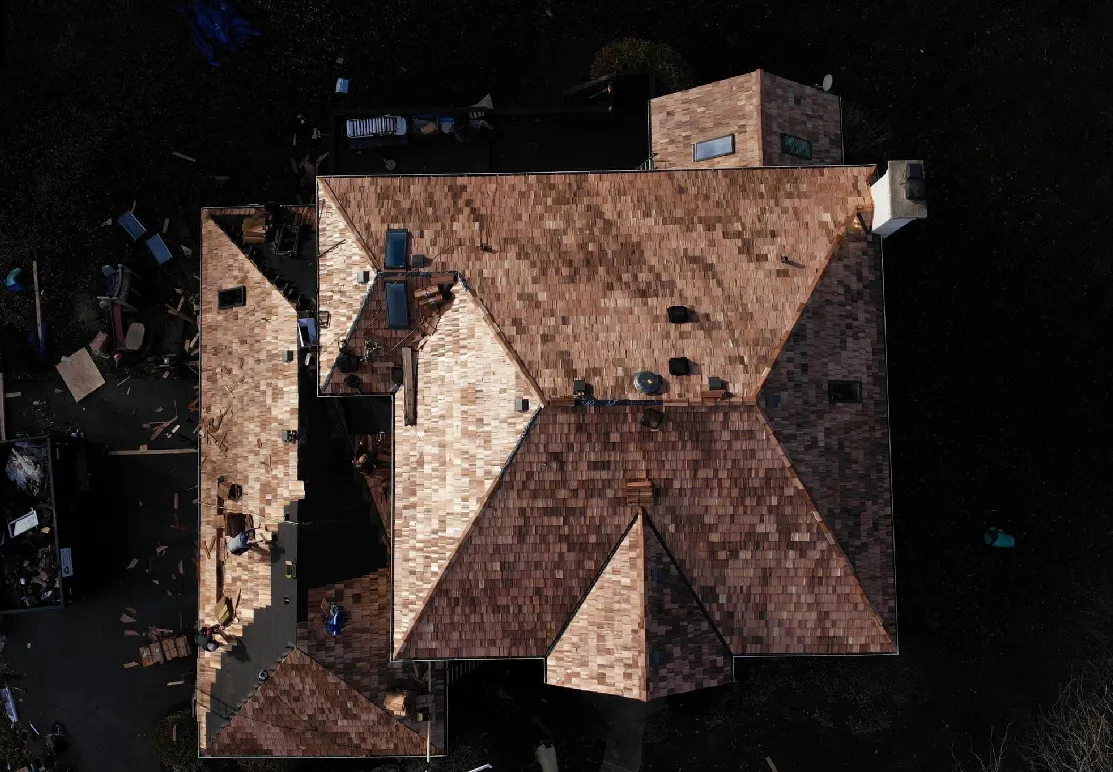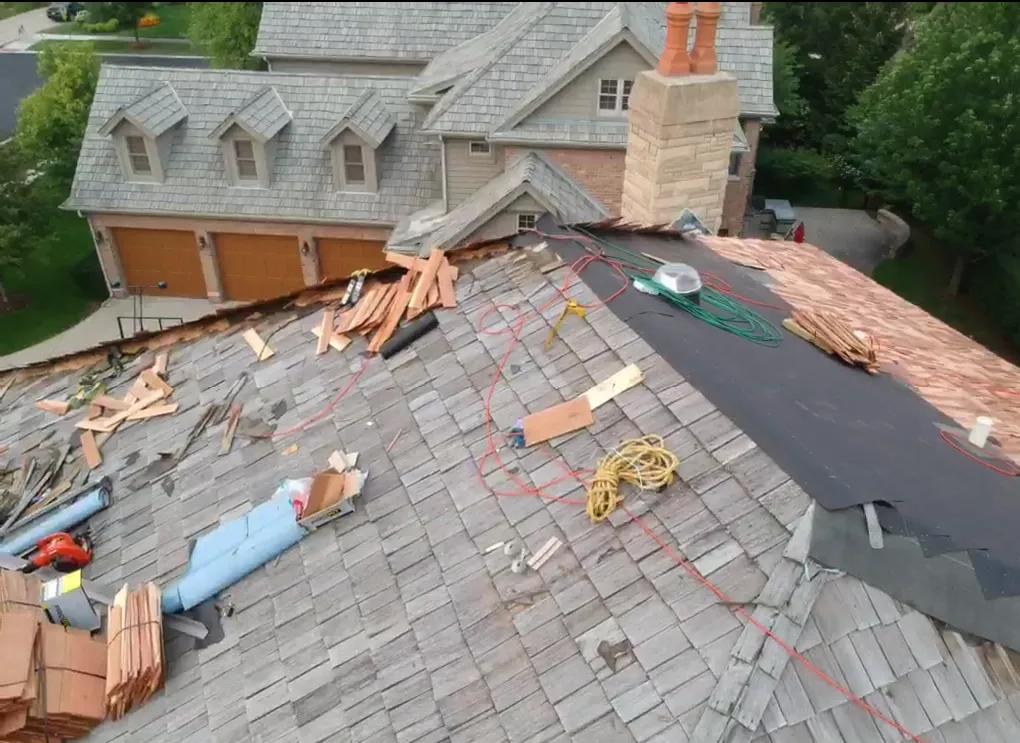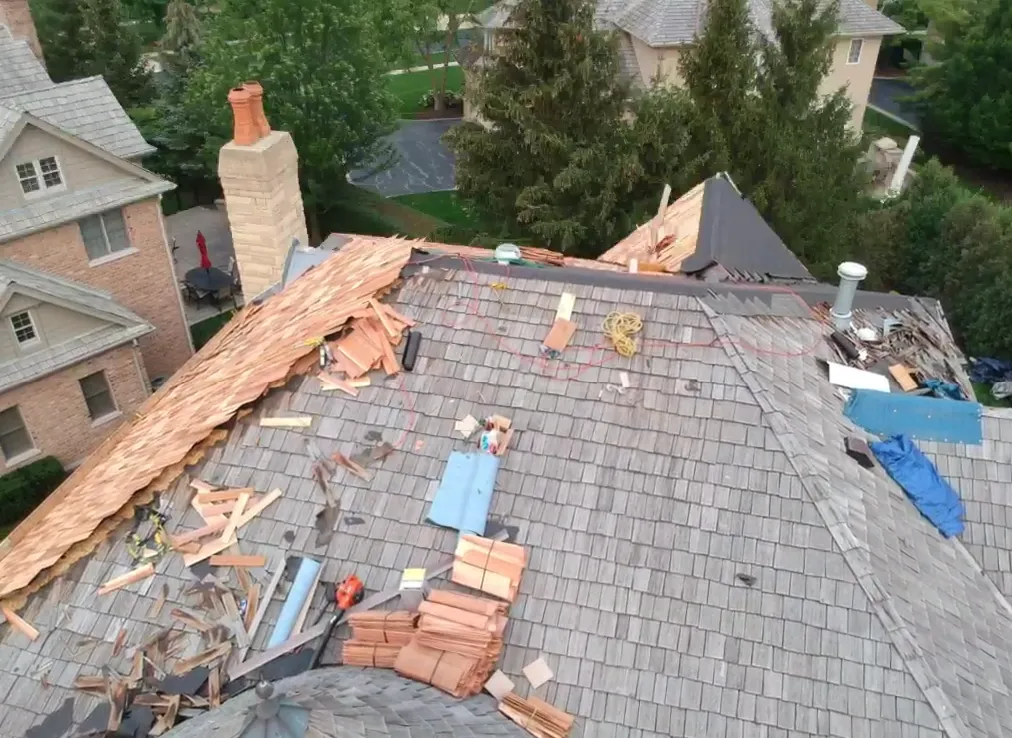
Few roofing materials have the character of cedar. The texture, the warm color when it is new and the silver-gray patina it develops over time make a cedar roof one of the most recognizable features of a classic home. But cedar is also a serious investment, so it is no surprise that one of the first questions homeowners ask is simple: how long does a cedar shake roof last?
The honest answer is that it depends. Two cedar roofs installed in the same year, on the same street, can reach the end of their lives decades apart. In this guide we explain the typical lifespan of a cedar roof, the factors that shorten or extend it, and what that means for homes in Chicago and the surrounding suburbs.
The Short Answer: 30 to 40 Years, Sometimes Much More
According to the Cedar Shake & Shingle Bureau, the industry association that inspects and certifies cedar mills, a cedar roof lasts on average around 30 to 40 years. The Bureau also notes that pressure-treated cedar products generally last longer than untreated ones.
Roofers who work with cedar every day see a wider range. A premium roof that was installed correctly and cared for regularly can stay in service for 40 to 50 years. On the other end, a roof built with low-grade material, poor ventilation and no maintenance can start failing in as little as 15 to 20 years.
For comparison, a standard asphalt shingle roof usually lasts somewhere between 20 and 25 years. Cedar can outlast it by a wide margin, but only when the right conditions are in place.
Why Two Cedar Roofs Can Age So Differently
1. The Grade and Cut of the Wood
Not all cedar is the same. The best roofing material is heartwood with a vertical (edge) grain and few knots. It is naturally rich in the oils that help cedar resist decay and insects. Lower grades contain more sapwood and flat grain, which absorb moisture more readily, cup and split sooner.
The type of product matters too. Thick, hand-split shakes typically last longer than thinner sawn shingles, simply because there is more wood to weather away. Look for bundles carrying a certification label from an inspected mill, which ensures consistent thickness and grading.
2. Installation Quality
A cedar roof is only as good as the crew that installs it. Nail placement, spacing between shakes, exposure length, underlayment and flashing details all have a direct effect on how water moves across and off the roof. The Cedar Shake & Shingle Bureau points out that excessive cupping and curling is most often caused by nails placed too high or too far from the edge, which is an installation error, not a material defect.
Fasteners are another detail that is easy to overlook. Cedar contains natural tannins that react with ordinary galvanized nails, which can corrode and leave black streaks over time. Stainless steel nails resist that corrosion and hold the shakes securely for the full life of the roof. This is one of the reasons we use stainless steel fasteners on every cedar shake roof installation.
3. Ventilation: Cedar Has to Breathe
Wood gets wet. That is normal and cedar handles it well, as long as it can dry out again. When moisture gets trapped underneath the shakes, rot and mold follow quickly.
Proper attic ventilation and an air space under the roofing are essential. Many modern cedar installations use a ventilation mat such as Cedar Breather, which creates continuous airflow beneath the shakes so they dry evenly from both sides. It is a small upgrade that can add years to the roof.
4. Climate and Surroundings
Constant moisture, heavy shade and debris are cedar’s biggest enemies. A roof under mature oaks or maples will collect leaves and needles, stay damp longer and grow moss faster than a roof in full sun. Roof pitch plays a role as well: steeper roofs shed water and debris faster and generally last longer than low-slope ones.
At the same time, too much direct sun can dry out untreated cedar and cause splitting. South-facing slopes often age differently from north-facing ones on the same house.
5. Maintenance, or the Lack of It
This is the factor homeowners control the most. Cedar is not a “set it and forget it” material. Keeping the surface clear of debris, cleaning off moss and algae and reapplying a protective treatment every few years makes a dramatic difference. The Bureau’s maintenance FAQ stresses that any buildup of needles, leaves and dirt affects how long a cedar roof lasts, because the wood needs to breathe.
How Chicago Weather Affects a Cedar Roof
The Chicago area puts roofs through a lot in a single year. Humid summers encourage moss and mildew. Fall brings heavy leaf drop across tree-lined suburbs. Winters deliver snow, repeated freeze-thaw cycles and, on many older homes, ice dams that push meltwater back up under the roofing at the eaves. Spring and summer storms can bring wind and hail.
None of this rules out cedar. Many homes in communities like Winnetka, Hinsdale and Oak Park have had cedar roofs for generations. It does mean that installation details matter even more here: ice and water protection at the eaves, good attic insulation and ventilation to limit ice dams, and a maintenance plan that accounts for the local seasons.
Signs Your Cedar Roof Is Nearing the End of Its Life
Cedar usually ages gradually, which gives you time to plan. Watch for these warning signs:
- Shakes that are badly cupped, curled or split across large areas of the roof
- Wood that feels soft or crumbles, especially near the lower edges
- Thick moss or lichen that keeps returning after cleaning
- Missing shakes or gaps where you can see underlayment
- Shakes that have worn very thin, sometimes with visible nail heads
- Water stains on ceilings or damp spots in the attic
A few damaged pieces are normal on an older roof and can be replaced individually. Widespread deterioration is a different story. For safety reasons, and because walking on cedar can crack the shakes, it is best to leave close inspections to a professional rather than climbing up yourself.
Repair, Restore or Replace?
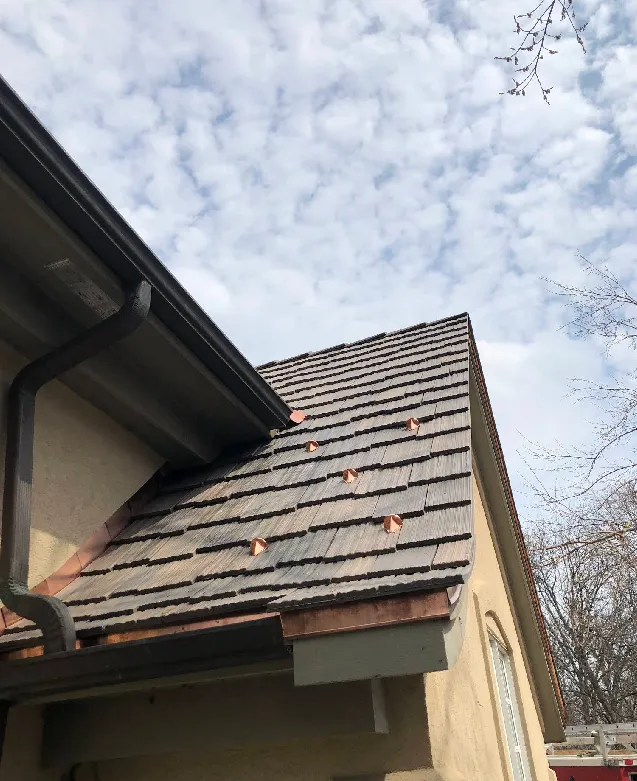
If your roof is still structurally sound, you may not need a full replacement. A professional cleaning, replacement of damaged shakes and a fresh protective treatment can restore both the appearance and the performance of a roof that is 10, 15 or even 20 years old. Adding copper or zinc strips near the ridge can also help keep moss under control on shaded slopes.
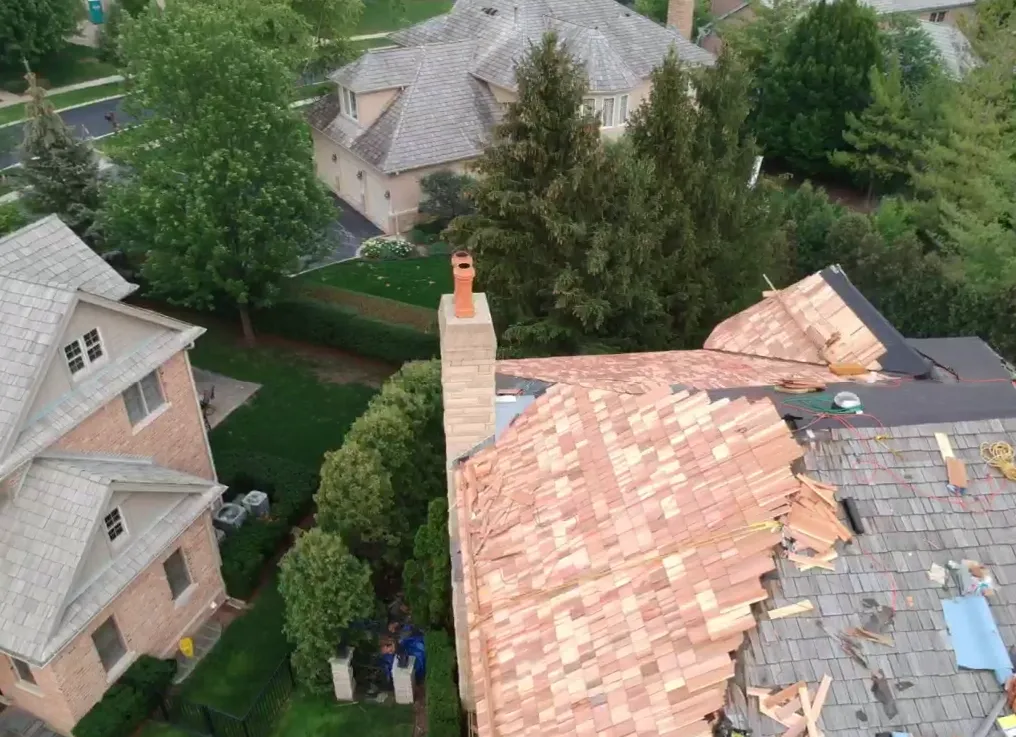
Replacement makes more sense when deterioration is spread across most of the roof, when leaks keep coming back, or when the original installation had problems such as poor ventilation that can only be fixed by starting over. In that case, a new roof built with high-grade cedar, stainless steel fasteners and a proper ventilation layer gives you the best chance of reaching the upper end of cedar’s lifespan.
How to Get the Most Years Out of Your Cedar Roof
- Choose certified, high-grade cedar and an installer who specializes in wood roofing
- Make sure the roof system includes proper ventilation and quality underlayment
- Keep gutters, valleys and the roof surface free of leaves and needles
- Trim back overhanging branches to let in sun and air
- Schedule a professional inspection every year or two
- Reapply an appropriate cedar treatment every few years, based on your roof’s exposure
- Repair small problems quickly before they spread
The Bottom Line
A cedar shake roof can realistically last 30 to 40 years, and well beyond that with high-quality materials, expert installation and consistent care. Skip those steps, and the same roof may need replacement in half the time. The difference comes down to decisions made on installation day and small habits over the years that follow.
If you are wondering how much life your current cedar roof has left, or you are planning a new one, contact All Roofs Cedar Shake for a free estimate. You can also browse our gallery of completed cedar roofs or check our service area to see if we work in your community.