If you love the look of a cedar shake roof, you have probably come across synthetic alternatives during your research. Brands like Brava and DaVinci market composite shakes as “the look of cedar without the upkeep,” and for some homes they are a reasonable option. For others, nothing replaces the real thing.
As a company that works exclusively with natural cedar, we obviously have a point of view. But choosing a roof is a decades-long decision, and you deserve a straightforward comparison. Below we look at how real cedar and synthetic shake roofing stack up on appearance, durability, fire and hail performance, maintenance, cost and environmental impact.
What Are Synthetic Cedar Shakes?
Synthetic shakes, also called composite or polymer shakes, are manufactured roofing tiles molded to imitate the texture and shape of split cedar. They are made from plastics, resins, rubber and additives such as UV stabilizers and fire retardants.
The two best-known brands take different approaches. Brava builds its tiles largely from recycled rubber and plastic. DaVinci Roofscapes uses a blend of virgin resins. Other manufacturers such as CertainTeed, EcoStar and F-Wave also offer composite shake products. All of them come in a range of preset colors and widths designed to mimic the variation of natural wood.
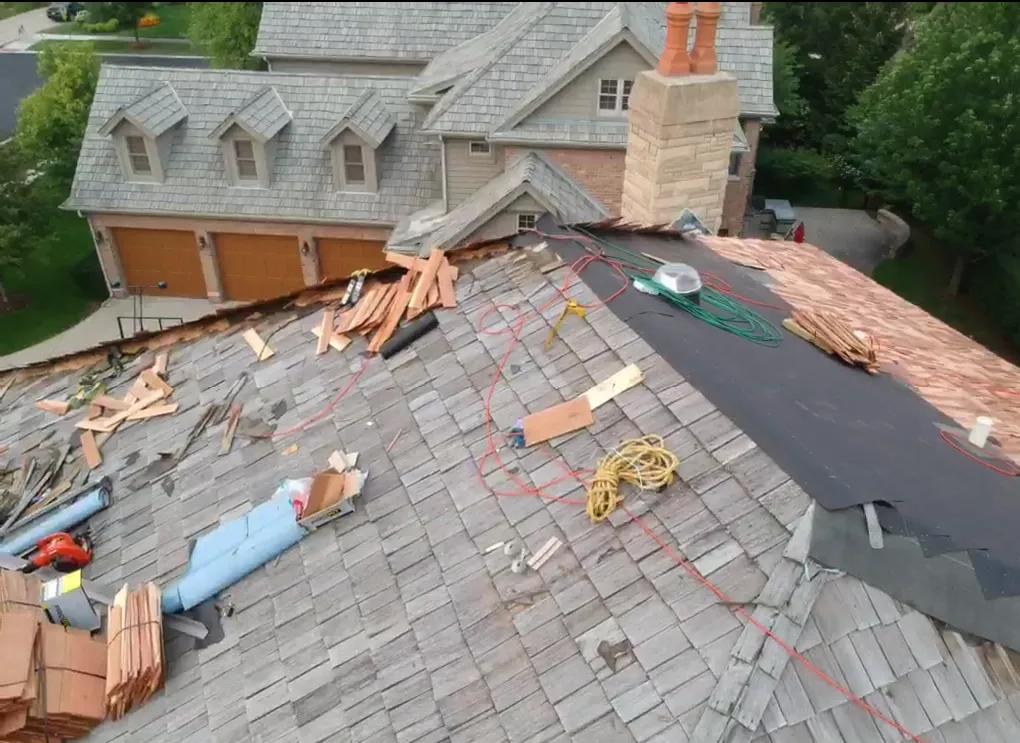
Real cedar shakes, by contrast, are split or sawn from Western red cedar and other cedar species. Each piece is unique, and the wood contains natural oils that help it resist decay and insects. If you want to understand what drives the lifespan of natural cedar, see our guide on how long a cedar shake roof lasts.
Appearance: Can You Tell the Difference?
From the street, a high-quality synthetic roof can look convincing, especially when it is new. Up close, the differences become easier to spot. Composite shakes are cast from molds, so textures eventually repeat. The edges tend to be more uniform, and the surface often has a slight sheen that wood never has.
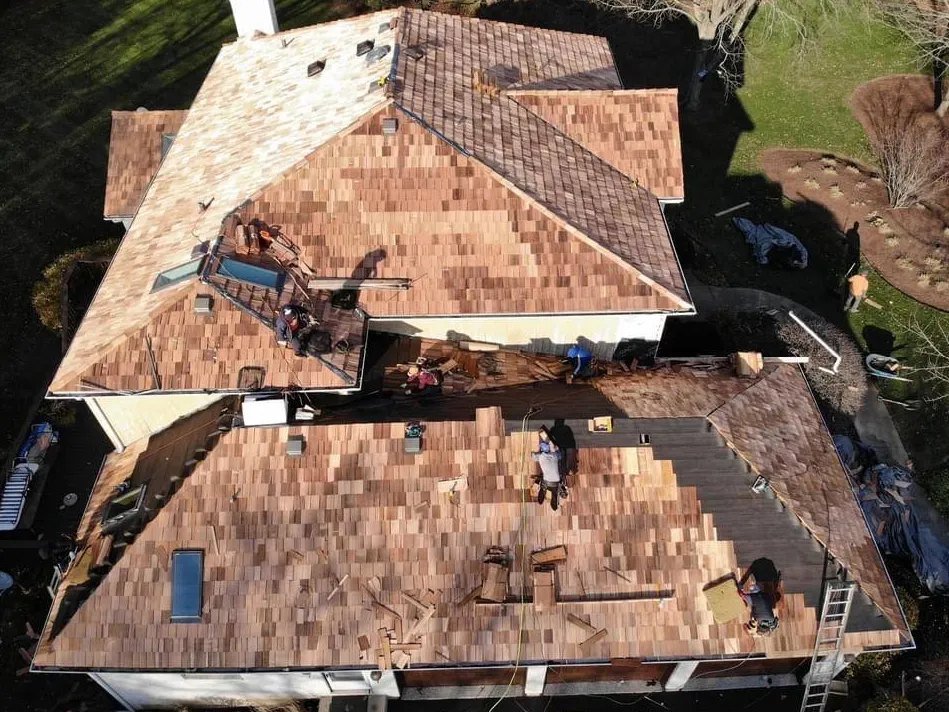
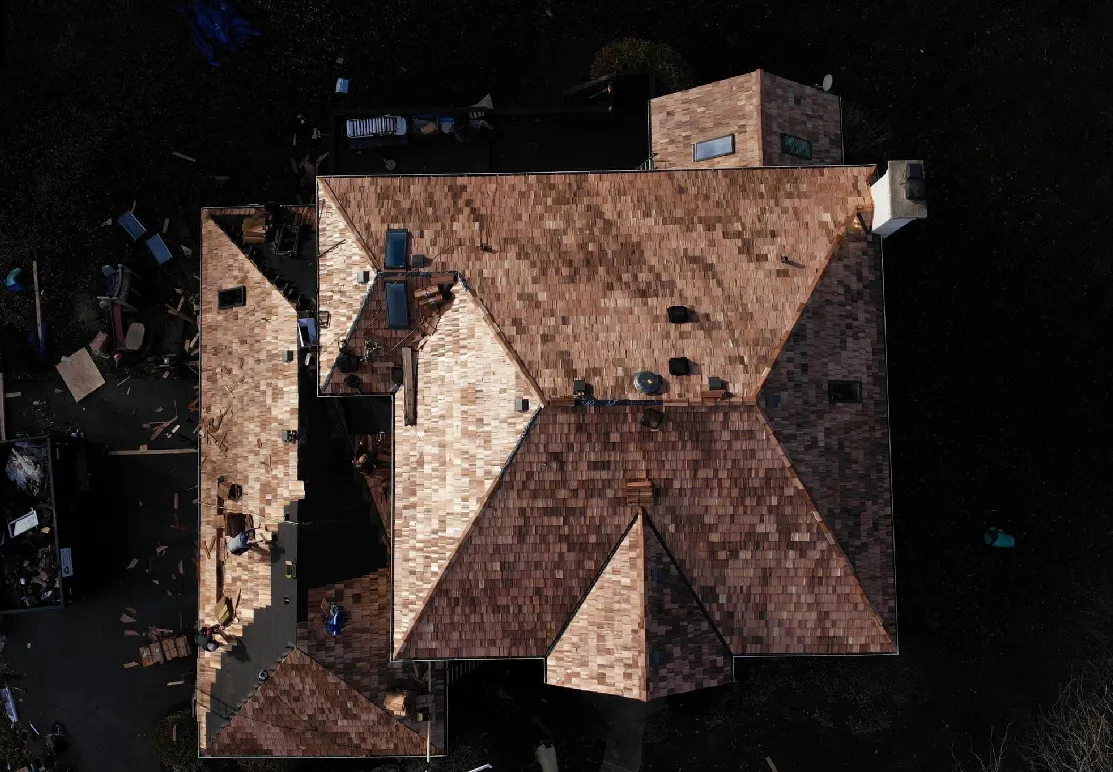
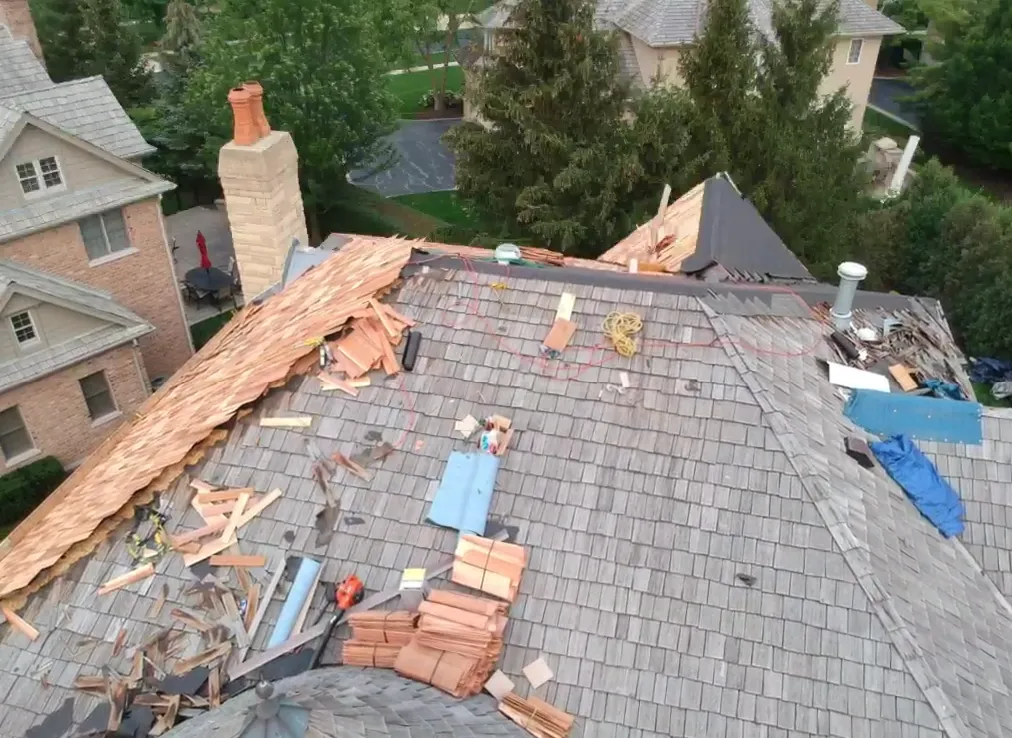
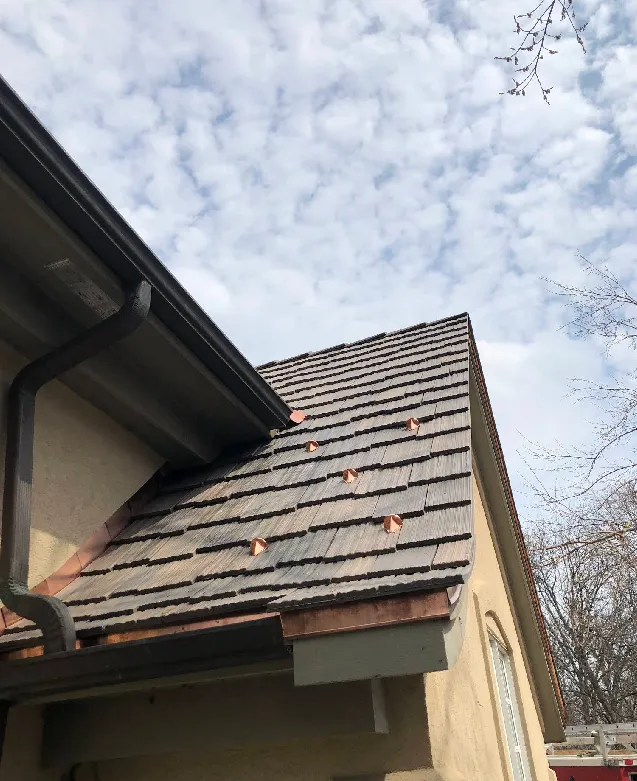
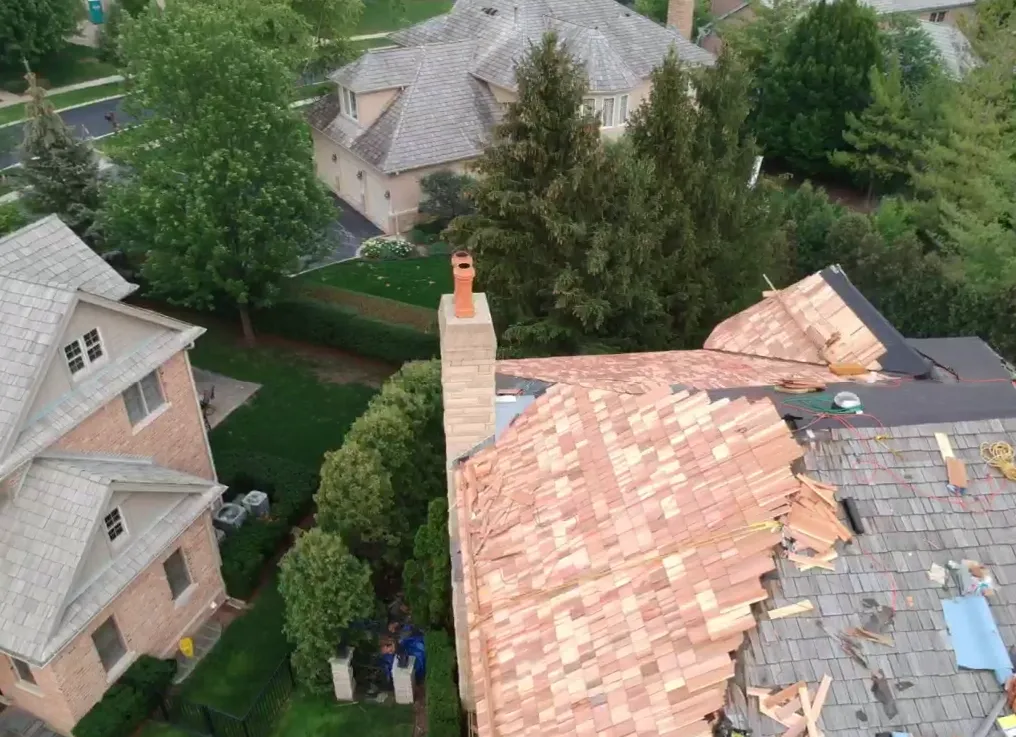
Real cedar has depth that is hard to copy. Grain patterns, thickness and color vary from shake to shake, and the roof changes over time. New cedar has a warm honey-brown tone and gradually weathers to a soft silver-gray, a look many homeowners actively want. Synthetic products are designed to hold one color, although most will still fade to some degree after years of sun exposure. For historic homes and architecturally significant properties, authenticity is often the deciding factor. You can see what natural cedar looks like on real homes in our project gallery.
Durability and Lifespan
Manufacturers of synthetic shakes offer long warranties. Brava advertises a 50-year limited warranty, and DaVinci offers a limited lifetime warranty on materials. It is worth reading the fine print, though. Warranties typically cover manufacturing defects, color fading coverage is often limited to a shorter period, and full protection usually requires installation by a certified contractor.
It is also fair to say that composite roofing is still a relatively young category compared to cedar, which has been used on North American homes for centuries. Long-term real-world performance data is still being collected.
A natural cedar roof built with high-grade material, proper ventilation and stainless steel fasteners, and maintained regularly, can last 30 to 40 years or more. Without maintenance, that number drops considerably. In other words, cedar’s lifespan depends heavily on how it is installed and cared for, while synthetic products trade some of that variability for a manufactured, more uniform product.
Hail and Impact Resistance
This is one area where synthetic shakes perform very well. Leading composite products carry a Class 4 impact rating under the UL 2218 test standard, the highest rating available, which can matter in hail-prone parts of the Midwest. Some insurers offer discounts for Class 4 roofs, so it is worth asking your agent.
Cedar is naturally flexible and handles wind and impact reasonably well, and thick hand-split shakes hold up better than thin shingles. However, standard cedar does not carry a Class 4 rating, and a severe hailstorm can split or dent older, dried-out shakes. Regular maintenance keeps the wood more resilient.
Fire Ratings
Fire is the most common concern about wood roofs. Untreated cedar is combustible, and some municipalities restrict its use. Many synthetic shakes are rated Class A for fire when installed with the specified underlayment, although ratings can vary by product line, so always confirm the exact product.
Cedar has options here too. According to the Cedar Shake & Shingle Bureau, shakes and shingles can be pressure-impregnated with fire-retardant treatment at the factory. These treated products carry Class B or Class C labels on their own, and a Class A wood roof can be achieved as a complete system with the appropriate underlayment. If fire rating is a requirement for your home or your insurer, discuss treated cedar with your contractor before ruling wood out.
Maintenance
Synthetic shakes win on day-to-day upkeep. They do not rot, they are not affected by insects and they generally do not need sealing or treatments. You may still need to clear debris and occasionally clean algae in shaded areas.
Cedar needs more attention. Keeping the roof free of leaves and needles, removing moss, trimming nearby trees and reapplying a protective treatment every few years all help it reach its full lifespan. The good news is that this work is predictable, and a professional maintenance plan takes most of the burden off the homeowner. It also brings a benefit: individual cedar shakes can be replaced easily, and new wood blends in as it weathers.
Cost
Both options sit at the premium end of the roofing market. Installed prices vary widely depending on roof size, pitch, complexity and product line, but in many markets a quality synthetic shake roof costs about the same as a natural cedar roof, and sometimes more. Asphalt shingles remain far cheaper than either.
When comparing quotes, look beyond the price per square foot. Consider the expected maintenance costs over time, potential insurance discounts, the value the roof adds to your home and how easy it will be to repair 20 years from now.
Environmental Impact
Cedar is a renewable, biodegradable material. Wood stores carbon absorbed while the tree was growing, and at the end of its life a cedar roof does not leave behind decades of plastic waste. Choosing certified cedar from well-managed forests further reduces the footprint.
Synthetic shakes have their own environmental story. Products made with recycled content keep some rubber and plastic out of landfills, and some manufacturers say their tiles can be recycled at the end of their life. They are, however, still petroleum-based products.
Quick Comparison
| Real Cedar Shakes | Synthetic Shakes | |
| Appearance | Authentic, unique, weathers naturally | Consistent, can look uniform up close |
| Typical lifespan | 30–40+ years with proper care | Long warranties, shorter track record |
| Hail rating | Varies, not Class 4 | Often Class 4 |
| Fire rating | Treated cedar and Class A systems available | Often Class A (verify product) |
| Maintenance | Regular care required | Minimal |
| Repairs | Easy to replace individual shakes | Color matching can be harder over time |
| Material | Natural, renewable, biodegradable | Plastic, resin and rubber based |
Which One Is Right for Your Home?
Synthetic shakes can make sense if your top priorities are minimal maintenance, a Class 4 impact rating or a strict fire code that treated cedar cannot meet.
Real cedar is usually the better fit if you care about authentic appearance, own a historic or high-end home where materials matter, value natural and renewable products, or want a roof that can be repaired piece by piece for decades. Homes across the North Shore and western suburbs, from Winnetka to Barrington, continue to choose cedar for exactly these reasons.
The Bottom Line
Synthetic shakes are an imitation of cedar, and a good imitation has its uses. But if what you love is the look, feel and character of a real wood roof, a properly installed and maintained cedar shake roof delivers something no composite product can fully replicate.
Not sure which direction is right for your home? Contact All Roofs Cedar Shake for a free consultation. We will inspect your roof, talk through your priorities and explain what a professional cedar installation includes, so you can make the decision with all the facts.